
You're Probably Missing the Point of The Drama. ✩⸜🎬⋆⭒ Film Review ✩
Weaponized white femininity, Zendaya's best work yet, and the character nobody's hating on enough. Let's take it there...

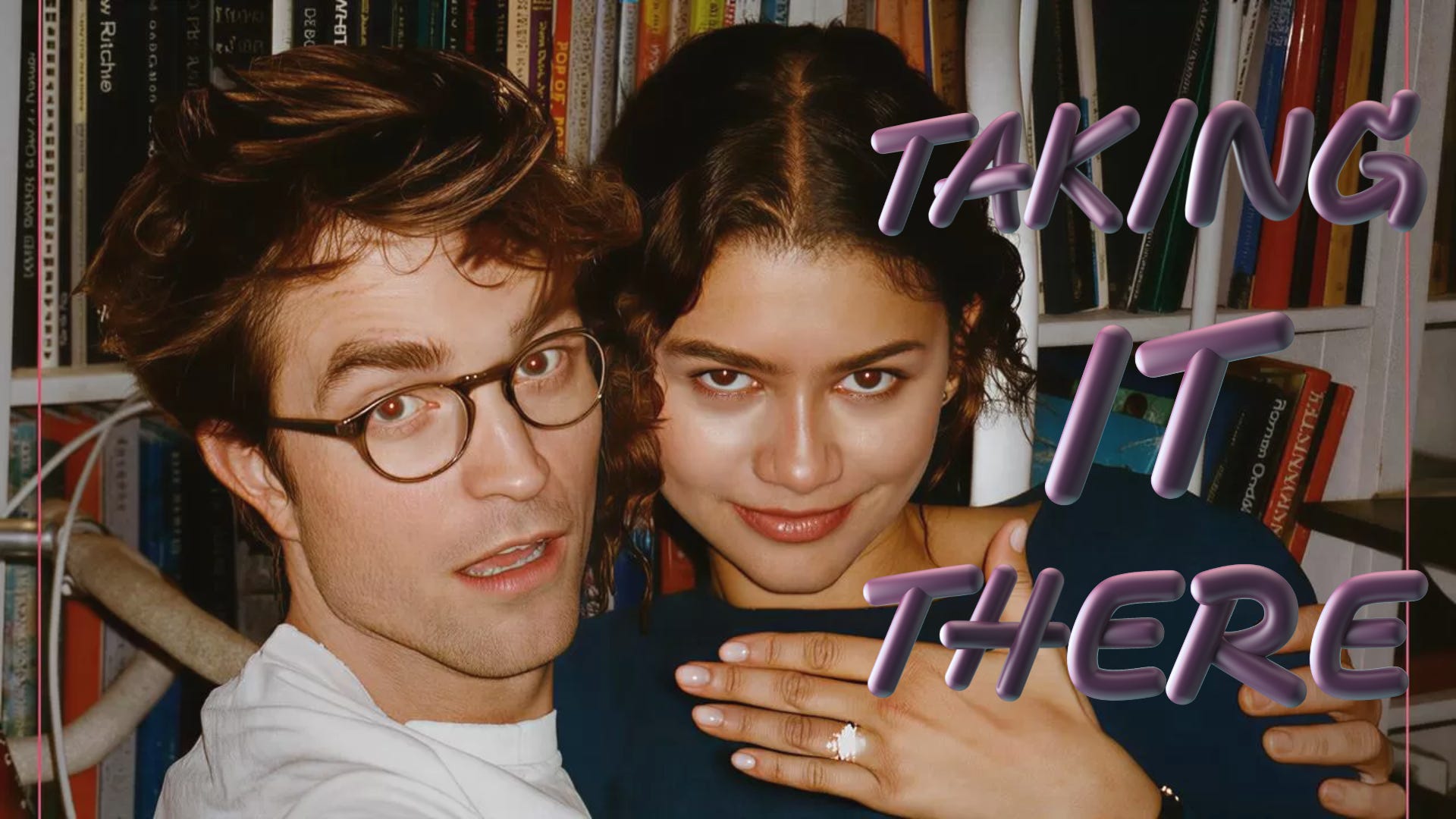
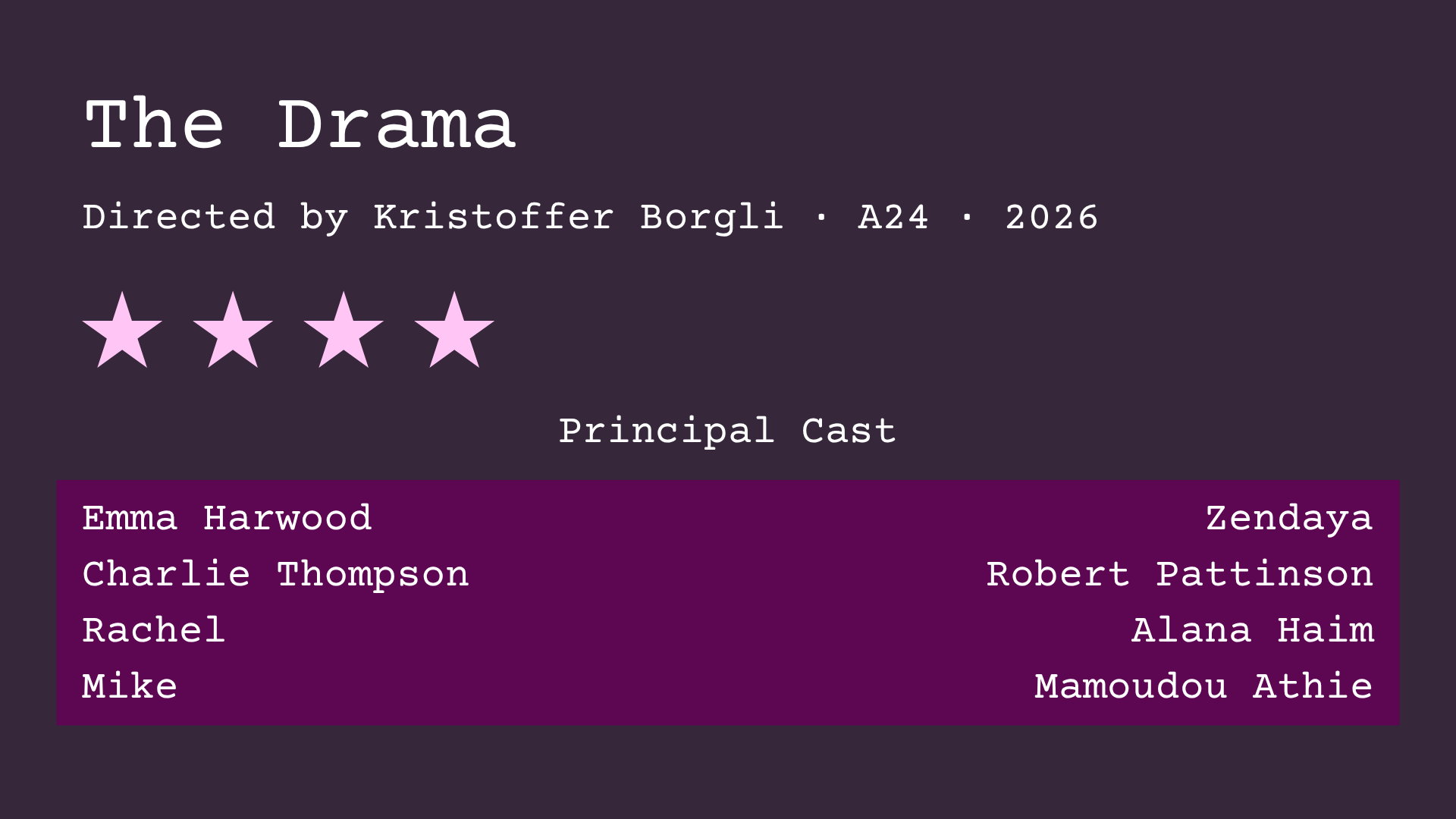
Full disclosure: I am not a neutral party here. If you have been following me for any amount of time you already know that we love Zendaya downnn in this house. I say that with the specific weight that zillennials carry when we talk about her. We watched her after school on Shake It Up, we watched her become something genuinely extraordinary, and we have been largely uninterested in participating in the discourse that flattens her performances into conversations about casting politics without ever doing the actual work of examining what she is doing on screen. Those takes are predictable, they are anti black in their framing, and they consistently fail to reckon with her demonstrated commitment to uplifting Black women through the projects she chooses. We are not doing that here. And then there is Rob, perpetually unhinged, chronically allergic to a normal press appearance, and yet somehow in possession of the most impeccable script taste of his entire generation. Real film lovers know. When he signs onto something, you show up. So when the two of them ended up together, not in a franchise but in a small sharp film about a wedding going catastrophically sideways, I went with my partner on opening weekend and I was not prepared for how much it would give me to write about. Yet none of it prepared me for the character Rachel. If you are a black woman and you have ever had a white girl friend you could not fully trust even when she was looking you in the eye telling you she loved you, this film is going to do something to you. That is the review. Everything else is just me explaining why.
Before we even get to the film… the press tour. I hope you have been scrolling my Substack notes. If so, you know I have been chronicling Zendaya's looks with what I can only describe as childlike wonder. The something-old-something-new-something-borrowed-something-blue arc she and Law Roach built across the entire campaign was fashion as narrative, as world-building, as its own complete artistic statement. The Vivienne Westwood at the premiere, a reclamation of the night an older white woman tried to embarrass her on the carpet. The Louis Vuitton bow in Paris. It was graceful in a way that felt effortless and if you know A24's instincts at all, the whole thing was almost a fakeout. They sold the girls a wedding. A rom-com. A love story with our twilight heartthrob. What we actually walked into was something far darker and more interesting, and our theater felt every inch of that shift together. The audience laughed, cringed, went completely silent, then laughed again. That collective experience of being tenderly and expertly deceived is, I think, part of what the film is actually about.
What the Film Is Actually Doing
Strip away the white lace and Borgli has made a film about surveillance: who gets watched, who gets believed, and whose past the culture decides is unforgivable. Emma Harwood (Zendaya), days before her wedding, confesses to her fiancé Charlie (Robert Pattinson) and their closest friends that as a bullied, alienated teenager she had planned a school shooting and chose not to go through with it. The dinner table detonates. The production design earns that detonation, by the way. The apartment Charlie and Emma share is lived-in in a way few films bother with, full of the accumulated texture of two people actually building a life: books doubled on shelves, the clutter of a kitchen used daily. The spaces feel inhabited before the characters arrive, which is part of why the unraveling lands as hard as it does.
The most significant creative decision Borgli makes is casting Zendaya as Emma. In the statistical reality of mass shootings in the United States, Emma Harwood does not exist. Mass shooters are overwhelmingly white, overwhelmingly male, and the mythology of the lone alienated shooter is inseparable from a very specific image. Placing a Black woman at the center of this narrative forces a profound cognitive dissonance. The film gestures at the racial dynamics of Emma’s backstory through flashbacks, but those sequences are rushed not because they fail but because the film is impatient to return to everyone else’s feelings about what Emma almost did. The casting is asked to do the theoretical heavy lifting that the script refuses to perform. Through bell hooks’ oppositional gaze, the camera too often watches Emma rather than inhabiting her, surveying her the same way Rachel does. Borgli sees the shape of the wound. He does not press on it.
Charlie and the Collapse of White Neoliberal Love
One of the film’s most precise observations is the way Charlie’s unraveling is not driven by his own convictions. It is driven by the opinions of others. In the immediate aftermath of Emma’s confession, Charlie is shaken but present. Almost as if he is willing to look past Emma’s confession. He performs the role of the enlightened partner processing something difficult, which is, crucially, still a performance. The mask slips not when he sits alone with what Emma has told him, but when he watches how Rachel reacts. And then Mike. And then, in his spiraling paranoia, how he imagines everyone at the wedding might react if they knew. His friends’ horror becomes his permission to deteriorate. Rachel’s disgust gives him cover for his own.
Charlie does not ultimately fear Emma’s past. He fears what her past says about his judgment among people he respects. His relationship with Emma was built on her being uncomplicated, on her fitting neatly into the image he has of himself as a cosmopolitan progressive Brit with good taste. The moment she becomes complicated he discovers the love he thought was unconditional was deeply conditional on her remaining the woman he had decided she was. Most white liberal relationships, the film implies with quiet brutality, are not between two people. They are between a person and a projection, and when the projection breaks, the relationship has nothing left to stand on.
The Oppositional Gaze and the Problem of the Camera
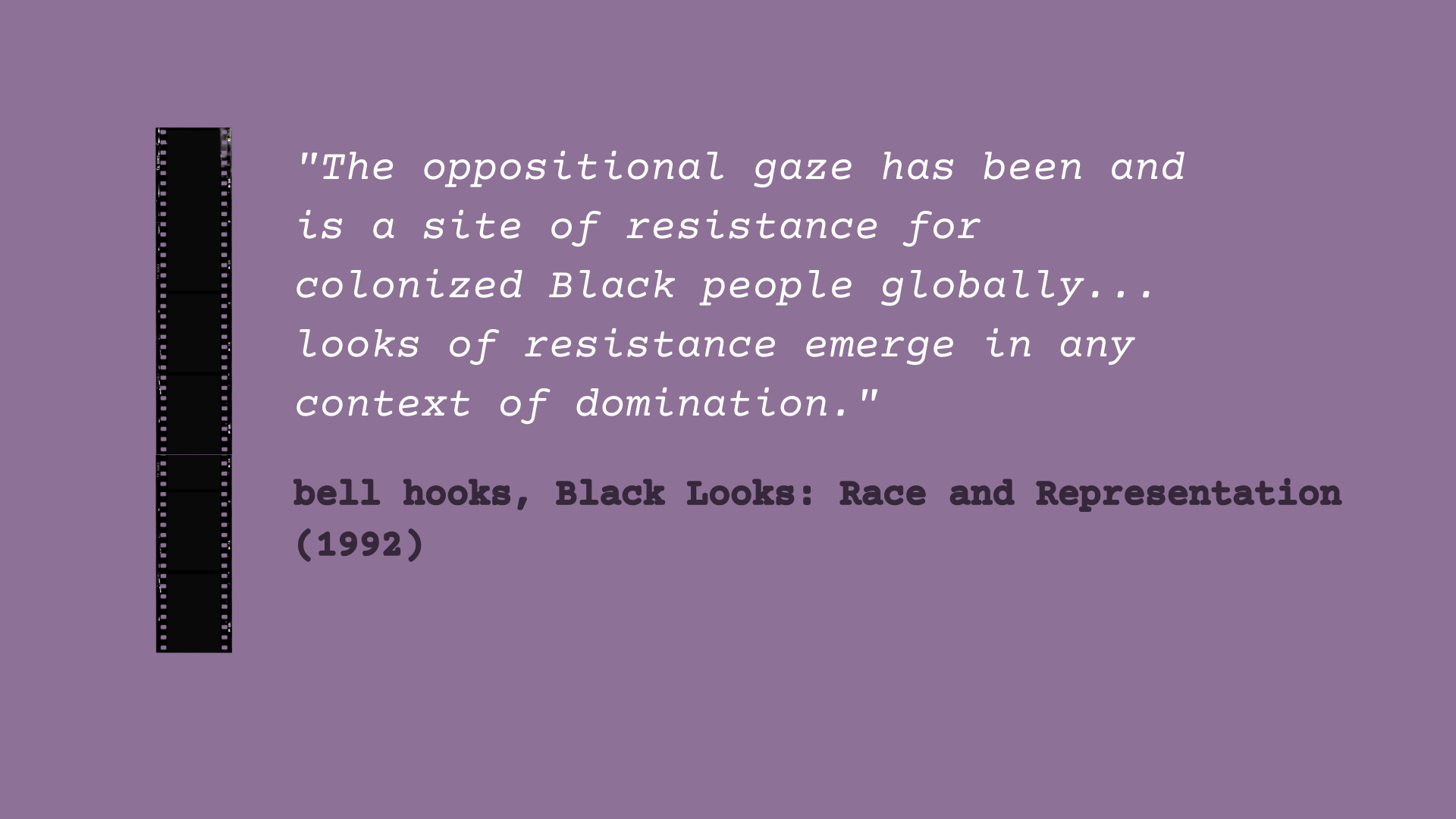
bell hooks articulated the oppositional gaze as the practice of Black spectators, particularly Black women, watching cinema not as passive consumers but as active resistant readers who recognize the ways the camera has historically refused to see them as fully human. The oppositional gaze says: I see what you are doing, and I see what you are not doing.
Applied to The Drama it is an uncomfortable but necessary lens. Borgli is a Norwegian outsider to American gun culture, and that position produces a film that can identify the shape of a social crisis without always understanding the body it inhabits, but it also produces something else: a ledger of absurdity. The distance that limits his depth is the same distance that lets him hold up a mirror and ask, with genuine bewilderment, do you see how unhinged you all look right now.
Where he succeeds is with young Emma. The flashbacks give her genuine interiority, the specific texture of alienation that makes her choice legible even when it is horrifying. Where the film falters is the leap to adulthood. Grown Emma is observed rather than inhabited, written as a woman whose inner life the script leaves for the audience to infer. What is remarkable is that Zendaya does not let that stand. The paranoia, the watchfulness, the way Emma moves through rooms full of people who now know her worst secret, Zendaya builds an entire interior world out of what the writing left blank. That is not just good acting. That is a performer refusing to let her character be reduced to the thing that happened to her.
hooks also argued that Black women in the cinema face a fundamental contradiction: embrace a spectatorship that wounds or actively resist it. The Drama places Zendaya, and by extension every Black woman in that theater, in precisely that bind. It asks us to watch a Black woman be surveilled, doubted, and disciplined for an act she did not commit, in a country where the actual statistics look nothing like her face. Borgli may intend this as subversion. Through the oppositional gaze it reads as something more complicated. The film mistakes representation for interrogation.
Rachel: The Film’s Most Honest Character

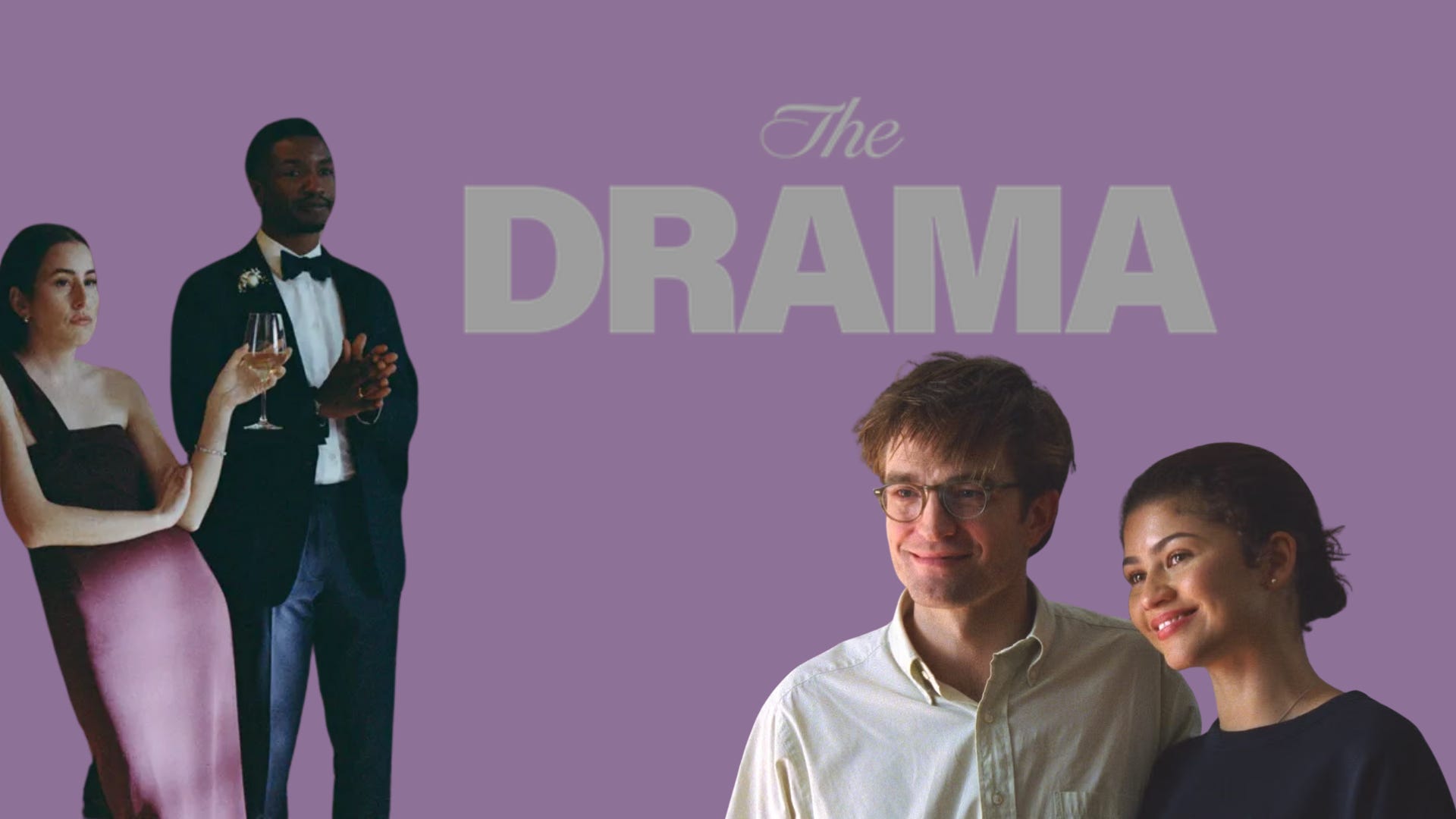
Every Black girl who has had to navigate white spaces at any formative point in her life knows Rachel. Not a version of her. Rachel specifically. The friendship that has terms you were never shown, the warmth that has a ceiling you only find out about when you hit it, the love that is somehow always conditional on you not becoming too much. Alana Haim plays this woman so accurately that I found myself physically uncomfortable in my seat, because Rachel is a villain who has spent her entire life convincing everyone around her, and probably herself, that she is not.
Rachel is Emma’s maid of honor and crucially a white woman who believes herself to be a good one. Her horror at Emma’s confession is genuine but it mutates into something that reveals far more about Rachel than Emma. Underneath the performative outrage is resentment. Not the resentment of a woman who has been wronged, but of a woman who has spent years being adjacent to someone more desirable and has finally found a socially acceptable reason to act on it. Emma is beautiful in a way that commands rooms. She is the woman Charlie chose. Rachel has had a front row seat to all of it, performing happiness and support while accumulating the quiet grievances that come from living in the shadow of someone the world has decided is exceptional. Read through the lens of what scholars like Shirley Anne Tate have written about Black women’s desirability as a site of both fetishization and threat, Emma represents something that white femininity has historically been positioned in opposition to: a self-possession that does not require respectability norms to be legible as attractive. Rachel has played by the rules. Emma, in her eyes, has not had to try as hard. The revelation becomes Rachel’s permission slip, transforming private resentment into public virtue. Now she is not jealous. She is concerned.
The microaggressions are precise and Haim lands each one with total accuracy. The passive aggressive comment about Emma being a late bloomer, carrying beneath its affectionate surface the message that Emma has always been a little suspect. Forcing Mike, her own husband, to share his secret even as he is visibly uncomfortable, insistence dressed as care. And then the film’s most quietly devastating moment: Rachel casually remarking that Mike grew up around guns, the implication dressed in sympathy, his Blackness making violence somehow self-explanatory in him in a way it is not in others. She does not register having said it. That is exactly the point. It reveals that her friendship with Emma was always conditional on Emma remaining safely exceptional rather than dangerously human. Rachel does not need to raise her voice. She simply exercises the cultural authority her position grants her, the authority to define what a woman in her circle is allowed to have survived. Emma is required to manage everyone else’s feelings about her own history. That is not friendship. It is, in Patricia Hill Collins’ terms, a relation of power masquerading as intimacy.
Weaponized White Femininity: A Borgli Blind Spot
Here is where I must return to the film’s central failure. The Drama is well-positioned to be a serious commentary on how white feminine distress has historically been used to discipline, surveil, and destroy Black people in America a history that runs from Emmett Till to Central Park birdwatcher Christian Cooper and far, far beyond. Rachel’s behavior in the film maps onto this tradition with disturbing precision. The film sees it. But Borgli does not give us a framework to fully feel its weight because Emma herself is never fully present enough on screen to bear the cost of it.
Kimberlé Crenshaw’s framework of intersectionality is instructive here. Emma’s experience cannot be understood through the lens of gender alone, or race alone. She is a Black woman who, as a teenager, contemplated violence born of isolation and alienation and then chose not to act. She is now being tried by her social circle for a thought crime that, had she been a white man, the American cultural apparatus would have processed very differently. The film touches this. It does not press on it. Borgli flinches exactly at the moment where his outsider gaze would need to become an excavation.
Final Verdict: The Performances Carry What the Script Refuses
This is a film you need to see with an audience. The collective experience of being in a room full of people laughing, cringing, going silent, and laughing again is itself a performance of everything the film is about. See it in a theater if you can.
Pattinson is extraordinary, perfecting the comedy of spineless liberal masculinity with the kind of self-lacerating charm only he can pull off. Zendaya is doing the most demanding work in the film and deserves more credit than she has gotten. Emma is observed more than inhabited by the script and yet Zendaya creates a woman of genuine fullness: self-possessed, warm, playing her not as victim or symbol but as a person who has done the interior work of surviving her own worst impulse and is now watching everyone around her refuse to do the same. That is a career-best performance in a film that keeps trying to get out of her way. And Jordyn Curet, who plays teenage Emma in the flashbacks, is a genuine discovery. Those sequences are the funniest material in the film and Curet carries them with comedic confidence and emotional specificity that makes young Emma feel like a complete person. The laughter comes from recognition, not ridicule. Haim is the political revelation of the whole thing. She plays Rachel’s recognizability with such total commitment that this is someone you have met, someone who would be horrified to see herself on this screen. The performance does not caricature. It witnesses.
The Drama knows something true about America and tells it sideways. Where it falls short is in the gap between what it sees and what it is willing to sit with. But that this deeply entertaining film still finds ways to make you think about that refusal long after you have left the theater is, finally, a genuine achievement.
If you want to convert your doomscroll into a reading list, checkout my community library where you can build your shelf with a physical copy of the texts referenced in this piece and download free pdf versions. The Taking It There Community Library, a living resource list of the further reading and mixed media that shapes these pieces: interviews, films, books, online articles, music, and more.
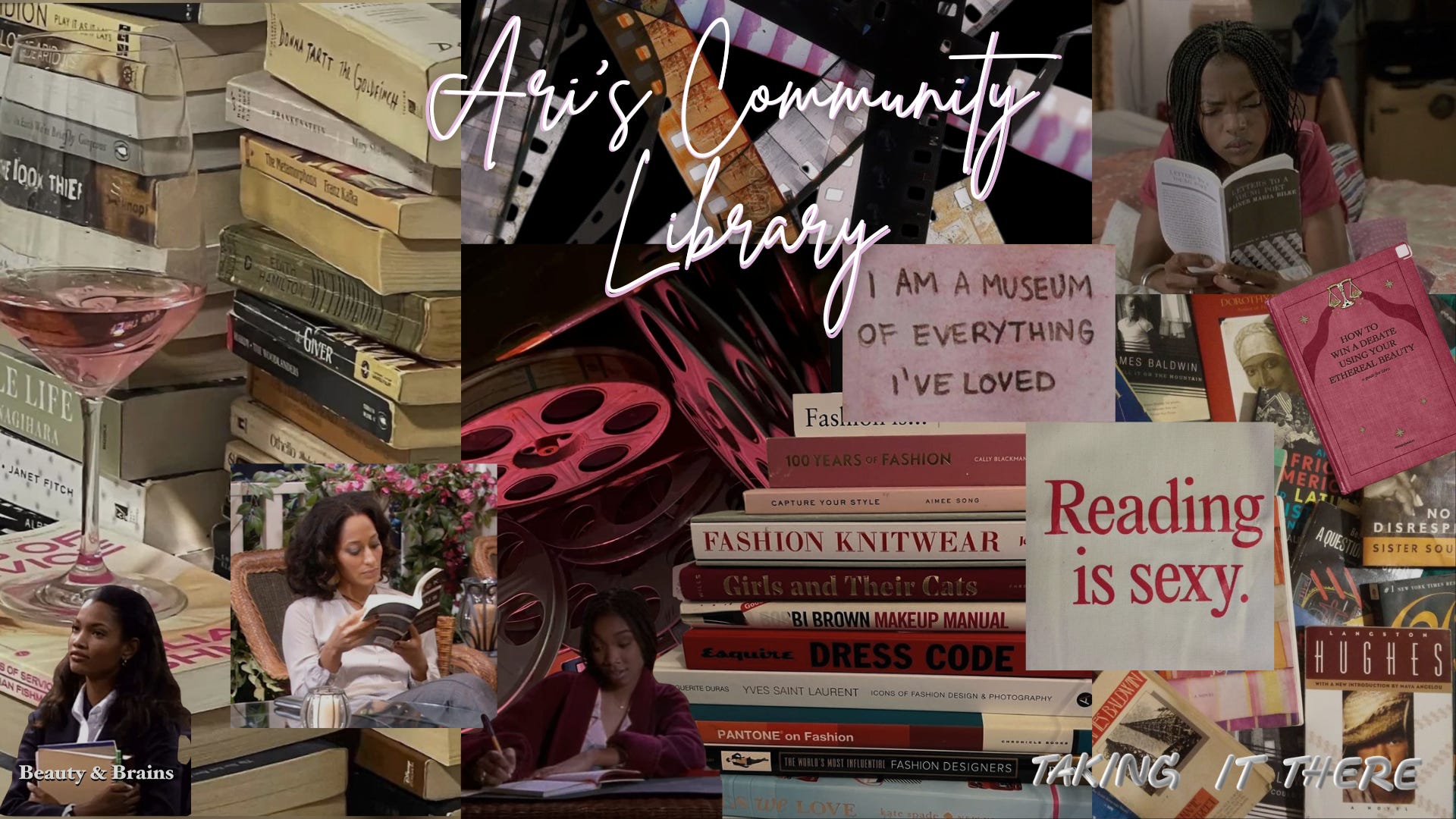
The goal is to decentralize information and make it accessible regardless of education or income, so anyone who wants to learn, be inspired, and go deeper can.
I’m committed to keeping this free, so if you’d like to support the time and care that goes into both the writing and the library, here are a few easy ways:
Purchase physical copies through my creator storefront (I earn a small commission)
Become a paid subscriber here on substack to help sustain the work.
Or, if you’re a Free subscriber, you can still support in a big way by liking, sharing, commenting, and forwarding this publication to someone who’d be into it, that reach really helps!

This was fantastic!!!
your assessment has been the most well rounded i've seen thus far! you take into account all the crucial factors for every character's understanding and placement in the film, as well as including that it's really everyone's performances that carry the film, not the writing. very much appreciate it all!